
Navigating Green Roof and Stormwater Compliance in New York City
New York City sets the bar for green infrastructure regulation in the United States. Between Local Laws 92, 94, and 97 and the Unified Stormwater Rule, nearly every new construction or major roof renovation in the five boroughs now comes with sustainability and stormwater requirements built in.
For developers, architects, and property owners, that changes how projects get planned. Roof design is no longer an afterthought. It determines whether your permit gets approved, whether you face emissions penalties, and how much stormwater your site needs to retain on day one.
This guide walks you through the key regulations, what they mean for your project, the strategies that satisfy multiple requirements at once, and the funding programs that can offset a significant part of the cost.
Reach out to us if you have any questions.
Key Regulations
New York City has one of the most comprehensive regulatory environments for green infrastructure in the U.S., driven by climate policy, stormwater management needs, and building emissions targets. For developers and property owners, these regulations directly shape how roofs and site systems must be designed to meet compliance, manage risk, and optimize long-term performance.
Key regulations impacting roof design include:
- Local Law 92 and Local Law 94
- Local Law 97
- Unified Stormwater Rule
- Stormwater Performance Standard (DEP)
- Stormwater Manual (SWM)
- New York State Construction Stormwater Permi (NYSDEC)
Local Law 92 and Local Law 94
Requires most new construction and major roof renovations to include “Sustainable Roof Zones,” where roof space must be used for solar arrays, vegetated roof systems, or a combination of both.
Read also: How to comply with New York City’s Local Law 92 and local Law 94
Link: https://www.epa.gov/heatislands/what-are-heat-islands
Local Law 97
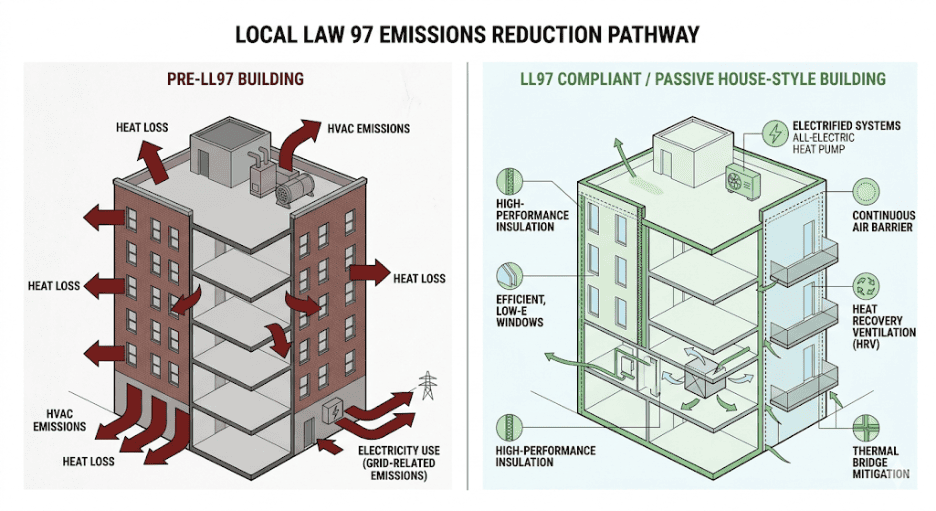
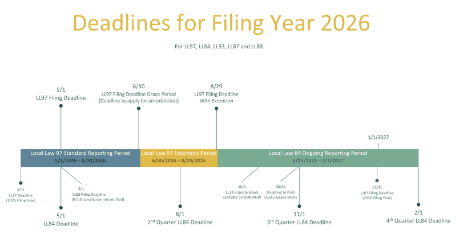
Establishes carbon emissions limits for new buildings, new roofs resulting from enlargement of existing buildings, and existing buildings replacing an entire roof deck or roof assembly, with compliance periods beginning in 2024 and tightening significantly by 2030. Buildings that exceed emissions caps face annual financial penalties, making energy performance a central consideration in design and retrofits.
Link: https://www.nyc.gov/site/buildings/codes/ll97-greenhouse-gas-emissions-reductions.page
Unified Stormwater Rule
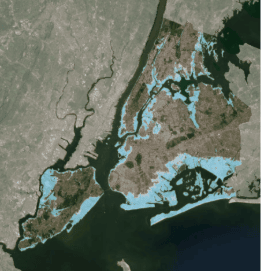
Establishes a retention-first approach to stormwater management. Applies to projects disturbing ≥20,000 sq ft of soil or creating or replacing ≥5,000 sq ft of impervious surface, requiring on-site stormwater retention and integration of green infrastructure.
Link: https://www.arcgis.com/apps/webappviewer/index.html?id=1c37d271fba14163bbb520517153d6d5
Stormwater Performance Standard (DEP)
Requires projects to manage stormwater on-site through a combination of retention and controlled release. Compliance is based on site-specific volume calculations and maximum release rates defined in the New York City Stormwater Manual, driving the use of systems such as green roofs, blue roofs, and subsurface detention.
Stormwater Manual (SWM)
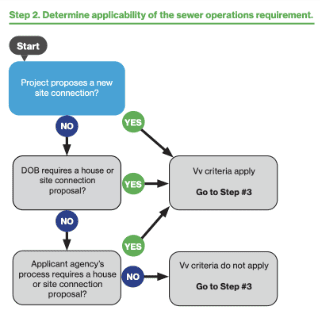
The New York City Stormwater Manual establishes the technical standards and calculation methods used to demonstrate compliance with DEP stormwater requirements. The manual provides guidance for sizing, designing, and documenting stormwater management systems (such as green roofs, blue roofs, and permeable pavement) for projects requiring DEP review, including sewer connection approvals and stormwater permitting.
New York State Construction Stormwater Permit (NYSDEC)
Applies to larger sites (typically ≥1 acre of disturbance), requiring Stormwater Pollution Prevention Plans (SWPPP) and erosion control measures during construction.
What This Means for Your Project
For most development and major renovation projects in New York City, roof design is a core component of regulatory compliance.
Projects receiving permits from the New York City Department of Buildings must incorporate sustainable roof systems unless exemptions apply. These may include:
- Roof areas required for mechanical equipment or access
- Occupiable terraces or recreational spaces
- Stormwater detention systems (e.g., blue roofs)
- Roofs with slopes exceeding 2:12
- Other conditions deemed infeasible by DOB
In practice, compliance often requires coordinating across multiple regulations:
- Roof space must be utilized (LL92/94)
- Stormwater must be retained on-site (USWR)
This creates a need for integrated solutions that address multiple requirements within a single system.
Compliance Strategies
Common approaches to meeting New York City requirements include:
- Solar arrays to satisfy roof utilization requirements
- Green roofs to manage stormwater and meet vegetative requirements
- Blue roofs detention systems for temporary water storage
- Bioretention basins to collect and filter stormwater on-site
- Hybrid systems combining green roofs and solar installations
Project constraints, such as limited roof space, stormwater requirements, and long-term performance goals, often influence which strategy is most effective.
Why Green Roofs
Green roofs are frequently used in New York City because they can address multiple regulatory requirements simultaneously.
They:
- Support compliance with Local Laws 92/94 by utilizing roof space
- Contribute to stormwater retention under the Unified Stormwater Rule
- May qualify for financial incentives through the Green Roof Tax Abatement Program
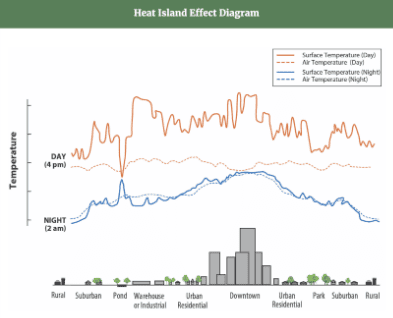
- Help reduce urban heat island effects and improve overall building performance
In many cases, green roofs become a practical and efficient solution where projects must balance stormwater management, regulatory compliance, and long-term asset performance.
How Adaptive Green Supports
Adaptive Green provides design, consulting, and installation services tailored to New York City’s regulatory environment.
With experience navigating both Department of Buildings and Department of Environmental Protection requirements, Adaptive Green supports clients through:
- System selection and design
- Integration of green roof systems into broader compliance strategies
- Coordination with project teams to meet permitting and performance requirements
- Delivery of durable systems designed for long-term performance
As green infrastructure becomes a standard component of development in New York City, early coordination and informed system design are critical to achieving efficient and compliant outcomes.
Funding Mechanism
New York City offers several financial tools to help offset the cost of green infrastructure and sustainable roof systems.
DEP Green Infrastructure Grants
- The New York City Department of Environmental Protection provides funding for projects that capture stormwater on-site, including green roofs. Funding levels are based on project performance and can significantly reduce costs, and in some cases may fully cover eligible project expenses depending on stormwater capture and project scope.
- Qualifying green roof projects may receive a per-square-foot tax credit, helping reduce overall installation costs.
- C-PACE allows projects to finance green roofs or solar systems and repay costs over time through a property tax assessment, reducing upfront capital requirements.
Available incentives and financing tools can significantly improve project feasibility, making green roofs a practical pathway for meeting New York City requirements.